My Research
Research Focus
Marie has long been fascinated by the way our brains and relationships shape how we heal. Her research has explored how the brain processes fear and trauma, including studies on fear memory reconsolidation and post-traumatic stress. Marie has learnt that approaching anxiety with a “just stop it” mentality can actually feed anxiety rather than “stop it”. She has also researched the experience of loss, post-traumatic growth, and relational connection among African refugee women resettled in Australia. Marie’s work reflects a deep curiosity about the biological and social roots of emotional pain, and how this understanding can gently guide people toward recovery and reconnection in everyday life.
Microtopography of Fear Memory Consolidation and Extinction Retrieval
Citation: Jacques, A., Chaaya, N., Hettiarachchi, C., Carmody, M. L., Beecher, K., Belmer, A., … & Johnson, L. R. (2019). Journal of Psychopharmacology, 1–15.
Rationale
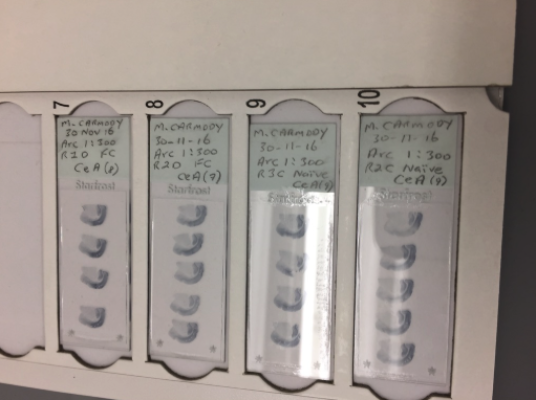
The precise neural circuitry that encodes fear memory and its extinction within the brain is not yet fully understood. Fearful memories can be persistent, resistant to extinction, and are often associated with psychiatric disorders, particularly post-traumatic stress disorder (PTSD). This study investigated the microtopography of neurons activated during the recall of an extinguished fear memory,
as well as the influence of time on this neural organisation.
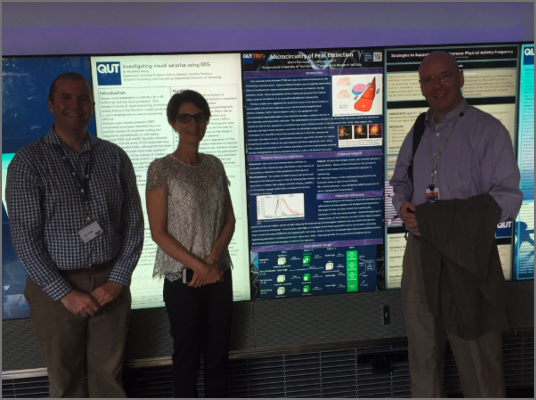
Winner of QUT’s Psychology First Prize for her research poster on fear memory consolidation in the central amygdala.
Personal Context
My passion for understanding the neurobiology of trauma and anxiety led me to conduct research for my thesis on a small but vital structure of the brain responsible for emotion, the amygdala. Prior to clinical practice, I worked as a management consultant and performance coach, where much of my focus was on helping senior executives manage stress and regulate their fight–flight–freeze responses. It was no surprise, then, that my professional experiences inspired me to explore more deeply the neurobiology of fear, anger, and anxiety, the very mechanisms that underlie so many patterns of suffering in our personal and professional relationships.
Narratives of Women-at-Risk Resettled in Australia: Loss, Renewal and Connection
Citation: Carmody, M.L., Schweitzer, R.D., Vromans, L. & La Marca, L. (2020). Journal of Loss and Trauma. https://doi.org/10.1080/15325024.2020.1845069
Summary
This qualitative study explores the stories of women from refugee backgrounds resettled in Australia, focusing on their experiences of loss, renewal, and connection.

Through in-depth interviews, the research highlights the emotional
complexity of forced migration and the psychological impact of
disconnection from homeland, culture, and identity. It also
explores how meaning-making and new relationships
can foster healing over time.
Relevance to Clinical Work
This research has enriched Marie’s therapeutic approach, helping her to see each person not only through the lens of their symptoms, but also through their capacity for resilience, meaning-making, and connection. It has deepened her belief that healing happens through relationship, safety, and understanding the body’s wisdom as much as through insight and reflection. This work very much influenced Marie’s interest in and adopting a relational psychotherapy framework in her practice.
What are you Waiting For?